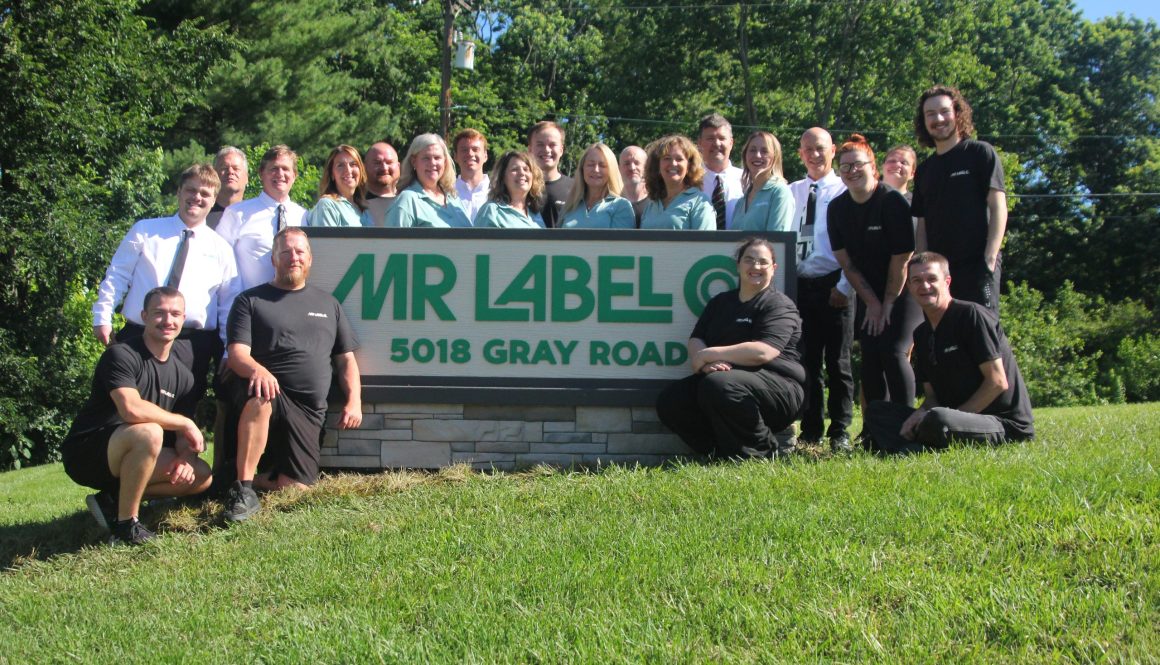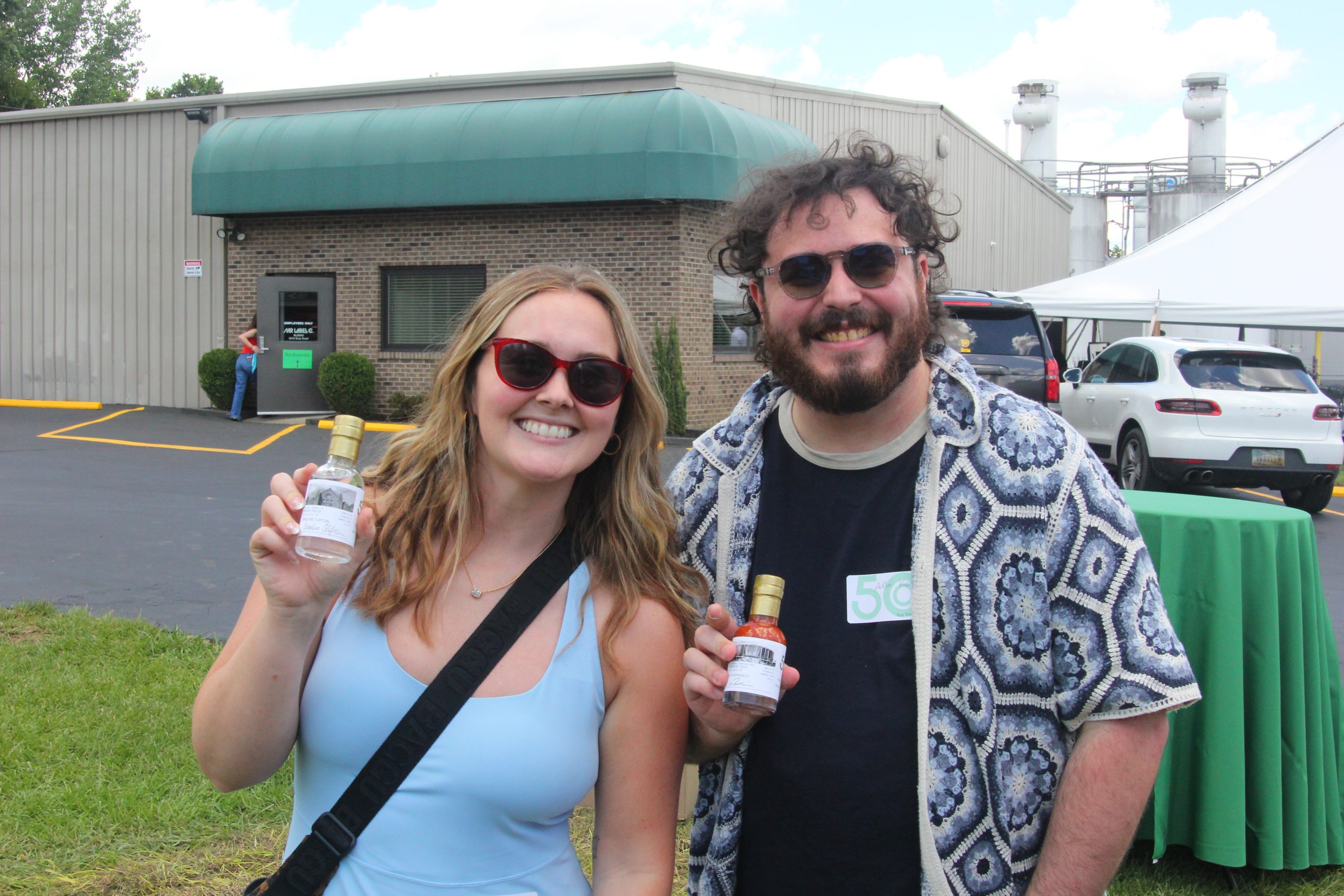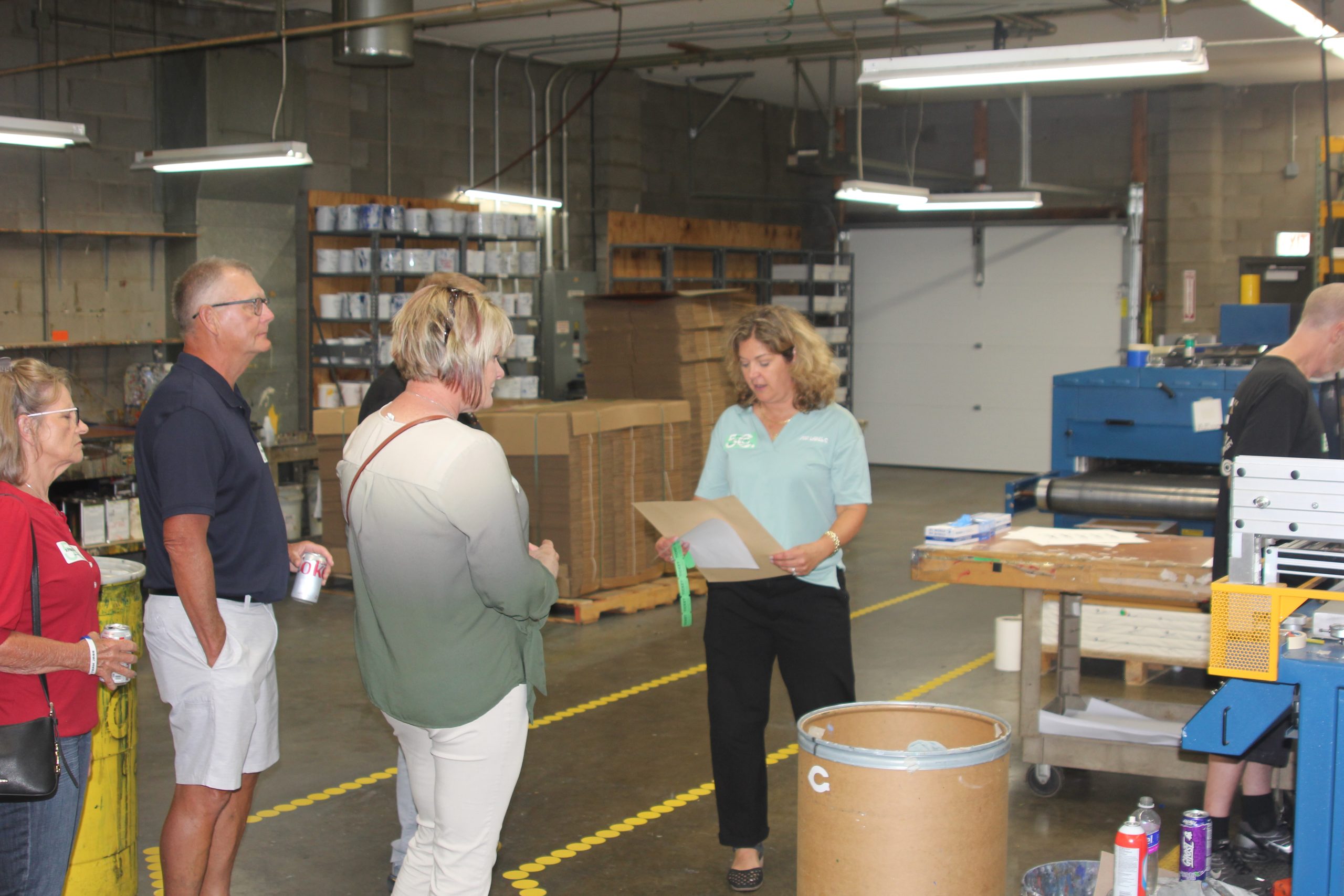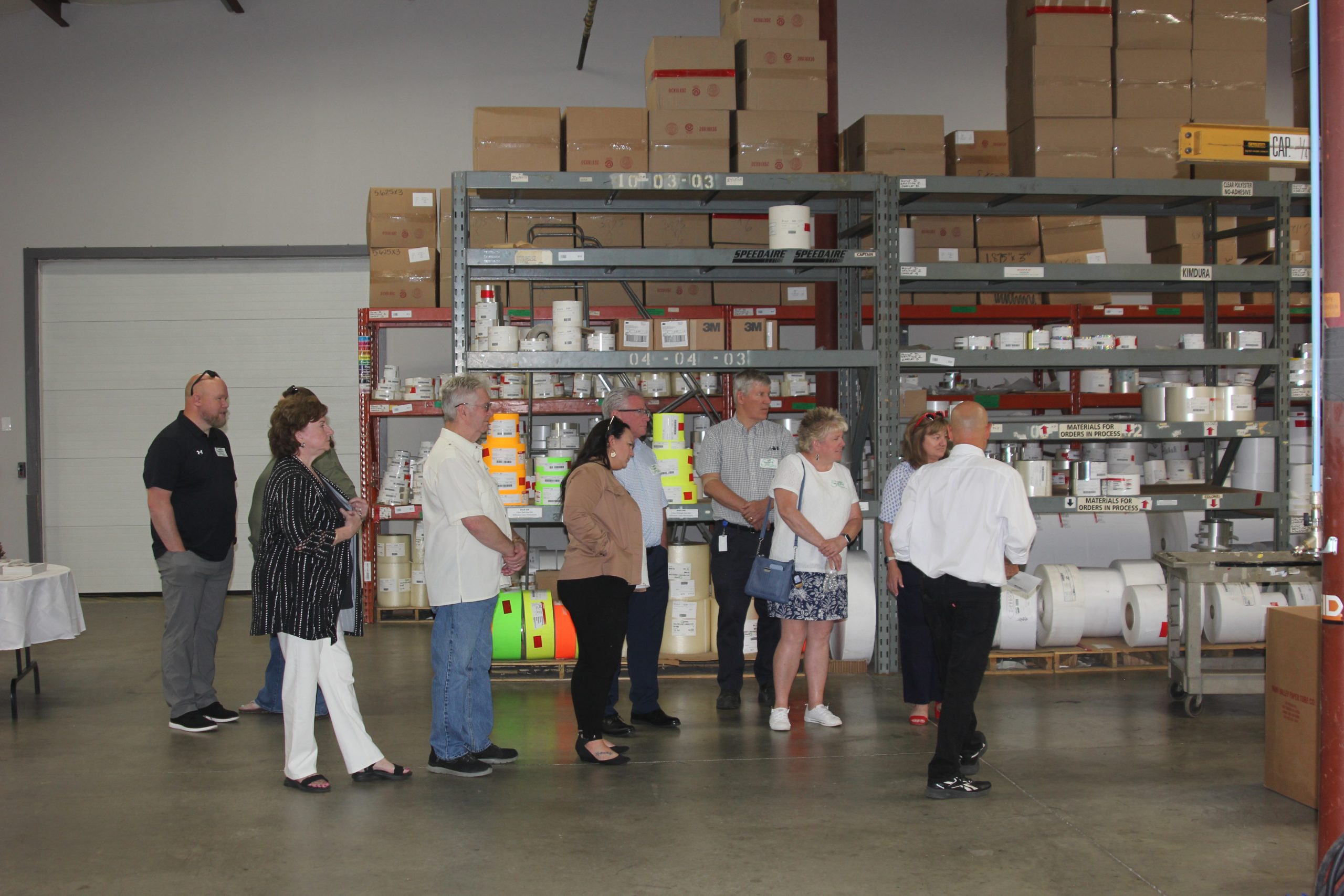
For 50 years, MR Label Co has proudly served customers with innovative labeling solutions, quality craftsmanship, and a commitment to excellence. To celebrate this incredible milestone, the company welcomed employees, customers, partners, and friends for a memorable anniversary event that honored five decades of growth and community support.
Guests enjoyed a day filled with great food, drinks, and plenty of fun while taking guided tours of the plant. Throughout the tour, attendees experienced the label-making process firsthand, creating their own custom label that was later applied to a bottle of their favorite spirit or hot sauce. The interactive experience gave visitors a unique behind-the-scenes look at how labels are designed and produced. The celebration concluded with gift giveaways from our generous customers, providing a memorable finish to a wonderful day of celebration.
Thank you again to all the people who helped make this happen as well as all the people who could attend. Your support means the world to us and helps us keep sticking around!
Not all labels are created equal; especially when it comes to durability and appearance. If your labels need to hold up to handling, light exposure, or just look a little more polished on the shelf, UV-coated labels are worth considering.
But what exactly is UV coating, and when does it make sense to use it?
What Are UV-Coated Labels?
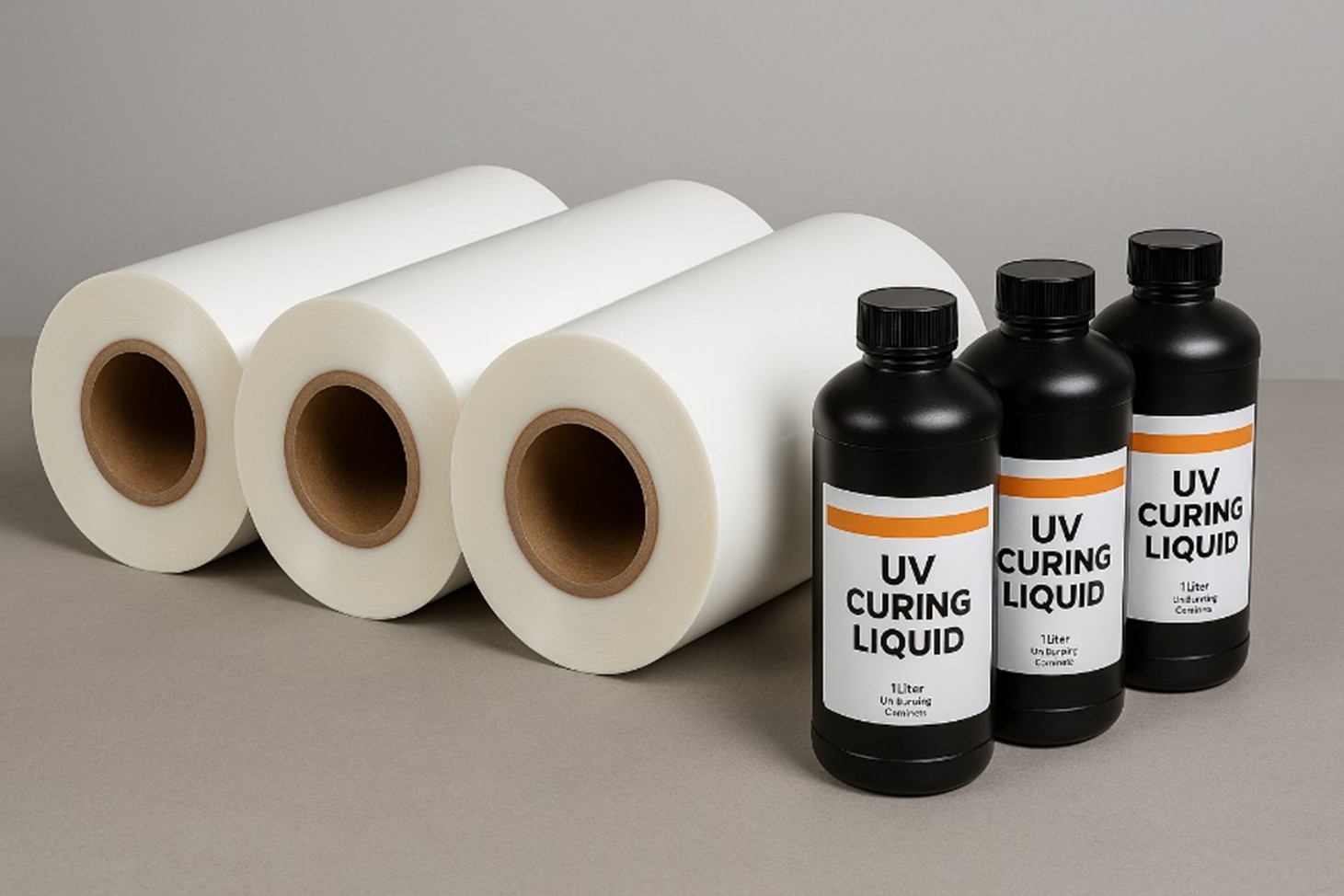
UV-coated labels are finished with a clear coating that’s cured instantly using ultraviolet light. This process creates a hardened layer on top of the printed label, adding both protection and visual appeal.
Think of it as a clear shield that sits over your design. It can be applied across the entire label or just to specific areas for added effect.
What Does UV Coating Actually Do?
UV coating serves two main purposes: protection and presentation.
Protects against fading – Helps prevent colors from dulling when exposed to light
Adds scratch resistance – Reduces scuffing during handling and transport
Improves moisture resistance – Provides a barrier against spills and humidity
Enhances appearance – Gloss finishes make colors pop, while matte finishes create a softer, more refined look
For example, imagine a product sitting near a storefront window. Without protection, the label might fade over time. With UV coating, it keeps its color and clarity much longer.
When Should You Use UV-Coated Labels?
UV coating isn’t necessary for every application, but it’s a great fit in a few key situations:
Retail packaging
If your product needs to stand out on the shelf, UV coating adds that extra visual impact.
Labels exposed to light
Products stored near windows or used outdoors benefit from added UV resistance.
High-contact items
Bottles, jars, or containers that are frequently handled can benefit from the added scratch protection.
Brand-focused designs
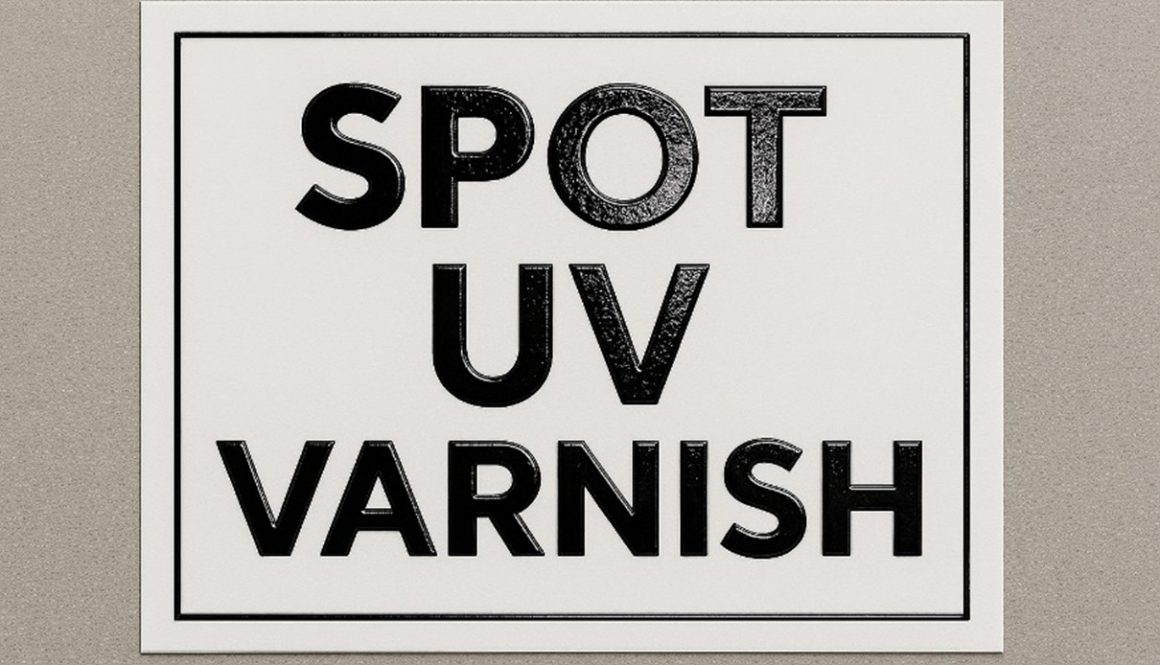
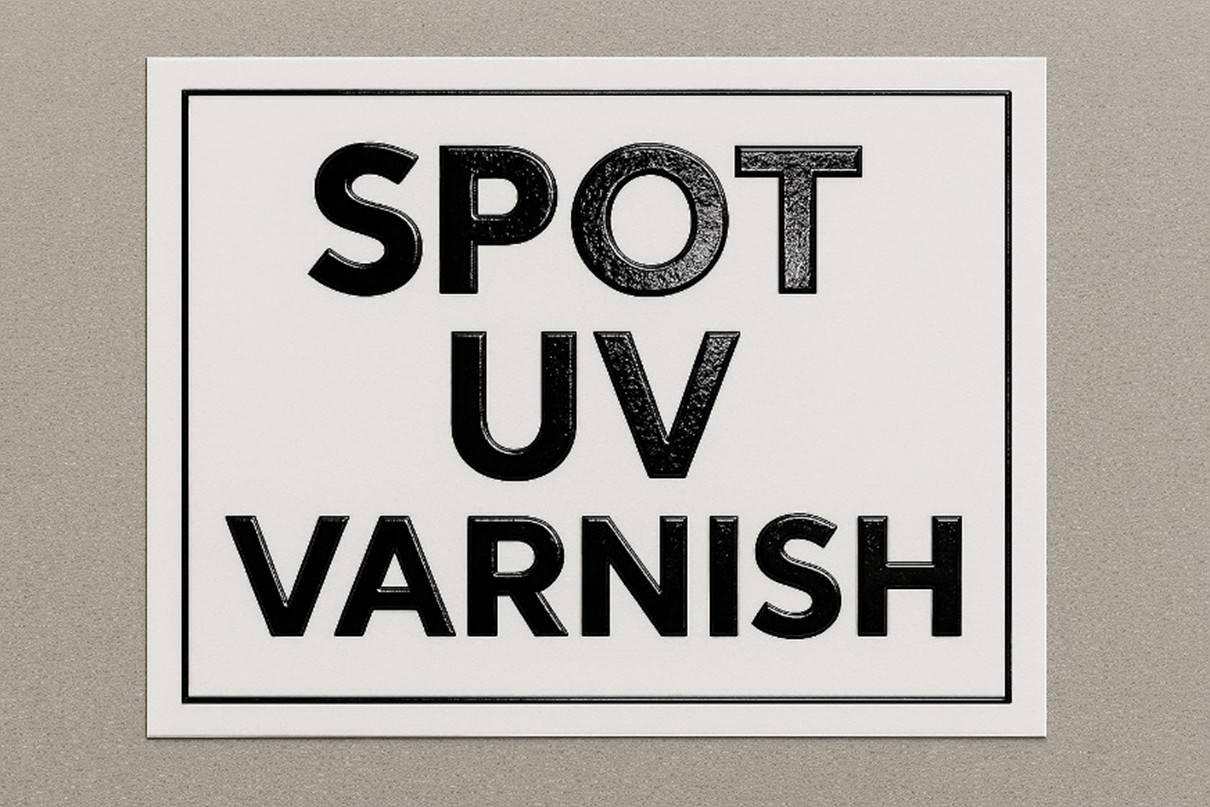
Spot UV can highlight logos or key design elements, adding a subtle premium feel.
When It Might Not Be the Best Fit
While UV coating adds value, it’s not always the right solution.
It may increase cost compared to uncoated labels
For extremely harsh environments (heavy chemicals or constant abrasion), lamination may offer stronger protection
Highly flexible applications may require a different finish depending on how the label bends or stretches
UV Coating vs. Lamination
It’s easy to confuse UV coating with lamination, but they’re not the same.
UV coating is a liquid layer that’s cured onto the label
Lamination is a physical film applied over the label
In general, UV coating is great for improving appearance and moderate durability, while lamination is better for maximum protection in demanding environments.
Final Thought
UV-coated labels strike a solid balance between durability and visual appeal. They help protect your design while giving it a more finished, professional look; especially in retail or light industrial settings.
If your labels need to look good and hold up to everyday use, UV coating is a simple upgrade that can make a noticeable difference.
Not sure if it’s the right fit for your application? Reach out! We’re happy to help you find the best option for your labels.
If you’re new to sourcing UL labels, the learning curve can feel steep. UL standards, label categories, compliance rules- it’s a lot to take in. But the good news is this: once you understand the core concepts, UL labeling becomes far more manageable. This guide breaks the essentials down into practical, easy-to-understand pieces so you can make confident purchasing decisions.
What are UL/cUL labels?
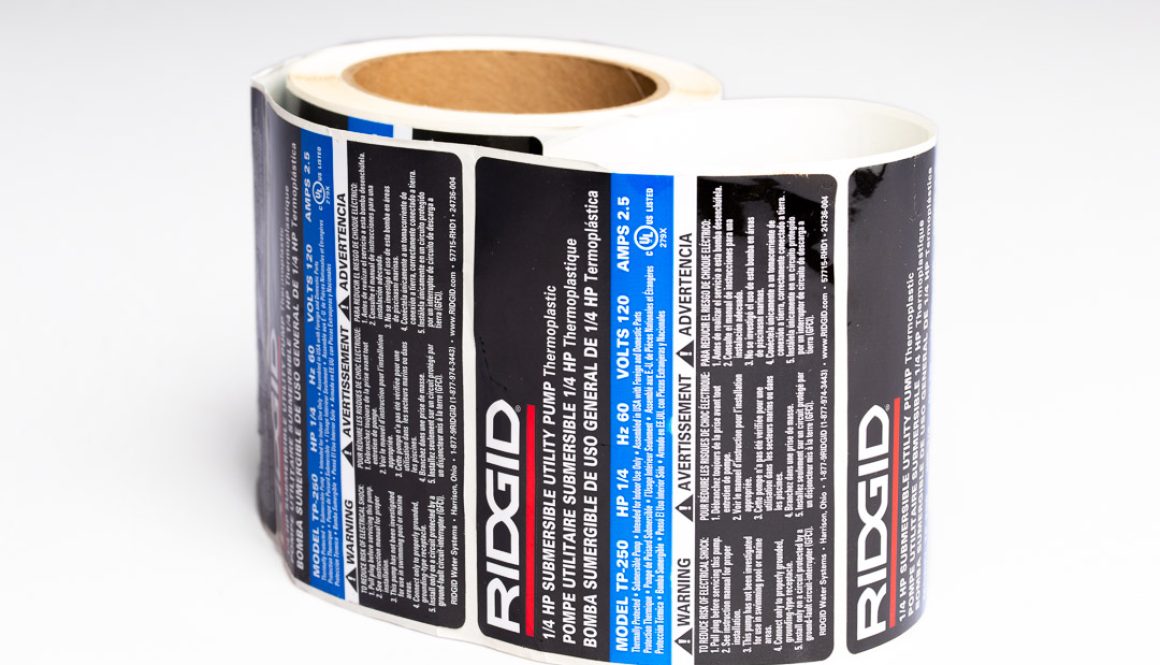
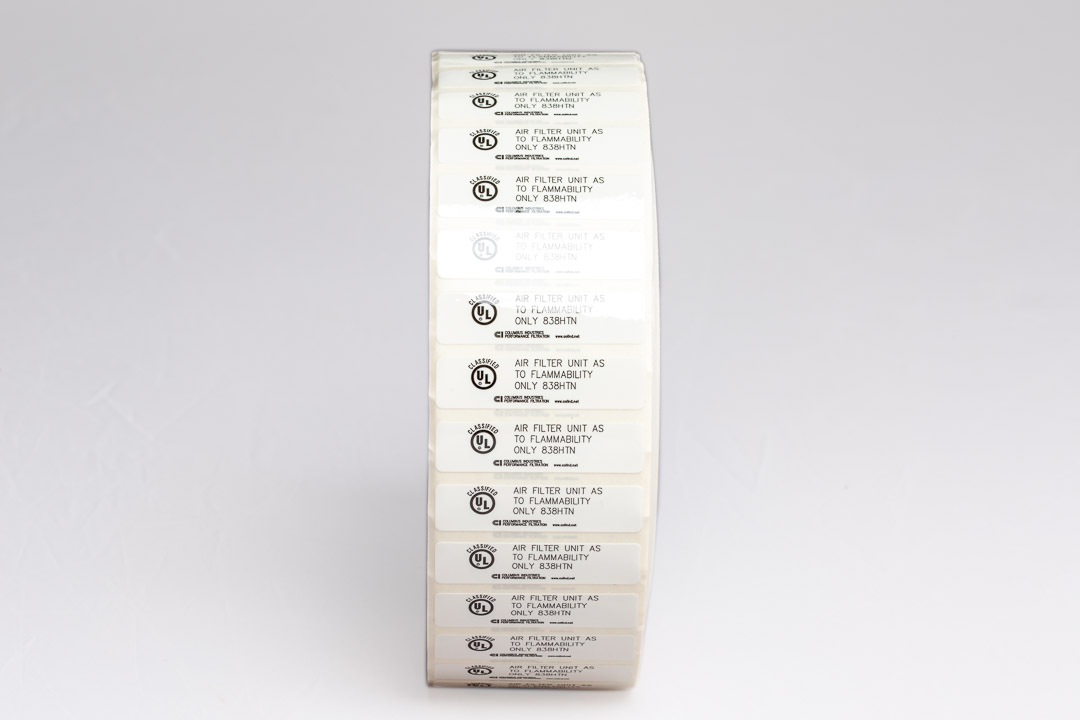
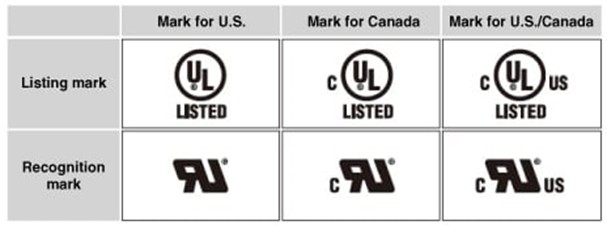
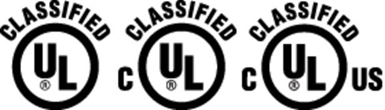
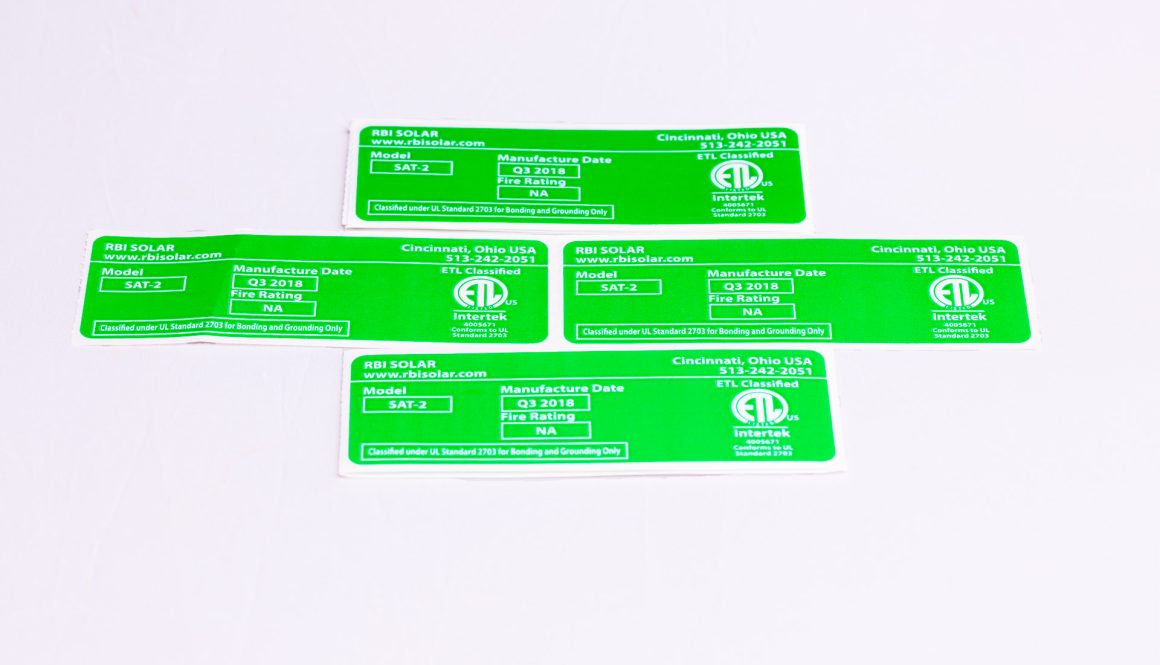
UL (Underwriters Laboratories) is an American safety company that develops safety standards for thousands of products used every day. The US and Canada work together to make products safe using testing standards set by each country. For any UL approved product, you will see the UL marking no matter if the product is approved for the US (UL), Canada (cUL), or for both (cULus). These symbols let regulators, inspectors, and consumers know that your product is safe, durable, and compliant. Generally, these types of labels are nameplates that are applied to devices, appliances, and equipment that include instructions and schematics. They are also likely to contain warnings, electrical ratings, and other safety related information.
While the label is evidence of a product complying with standards, it also has strict performance requirements it must meet. The label must stay attached, legible, and intact for the life of the product- even under temperature extremes, gasoline/oils, and other conditions. The requirements for UL labels can be found under UL 969 the Standard for Safety of Marking and Labeling Systems.
Mr. Label VL- CSA – ETL
Who makes UL/cUL labels?
Only authorized suppliers can produce UL/cUL marked labels.
Every authorized supplier has a UL file number that houses their listings that are searchable through the UL online database. Listings are “systems” that are assigned to a category of how the label will be used. Systems comprise of the material construction (stock, laminate, and adhesive), printing inks, ribbon types, and print method that have been approved for the listing.
These authorized suppliers are audited by UL inspectors on a quarterly basis. The purpose of these audits is to make sure the printers are following the regulations set by UL for safety.
What are common categories of UL/cUL labels?
PGDQ2/8 – Marking & Labeling Systems
Finished, printed labels approved for specific environments
PGJI2/8 – Printing Materials
Unprinted or partially printed labels designed for additional printing with UL approved ribbon
PGIS2 – Marking and Labeling Systems, Limited use – Component
Covers items such as cord tags and placards evaluated for specific end-product standards
How are UL/cUL labels put to the test?
UL doesn’t just certify the adhesive or the film; it certifies the entire construction under real-world conditions. Common durability tests include:
High/low temperature cycling
Humidity and water immersion
Chemical splash exposure (oils, fuels, cleaning agents)
UV and outdoor weathering
Abrasion and defacement resistance
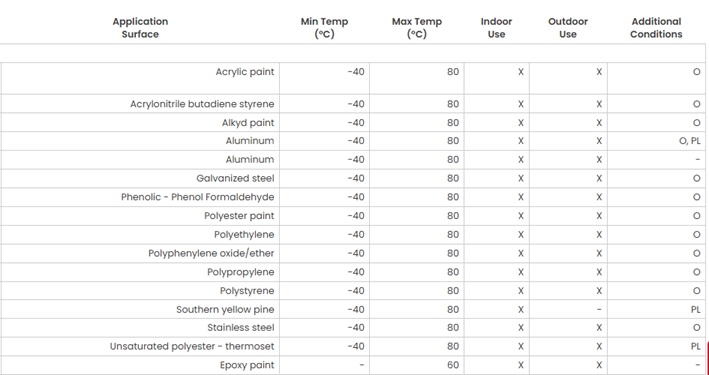
On each UL file you can find the different surface types a construction is suitable for and the service temperature ranges for those surfaces.
What are UL markings and how are they used?
Using the UL Mark correctly is critical. Depending on your certification, you may need:
the Listing mark- indicates UL has evaluated product for compliance with applicable safety requirements
the Recognized Component mark- for components that make up a listed product
the Classified mark- product has been tested to use for special conditions
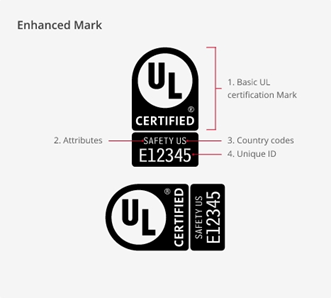
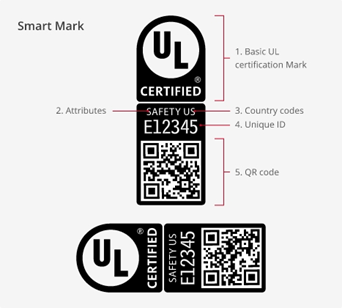
UL also has newer Enhanced and Smart marks that provide more information on them.
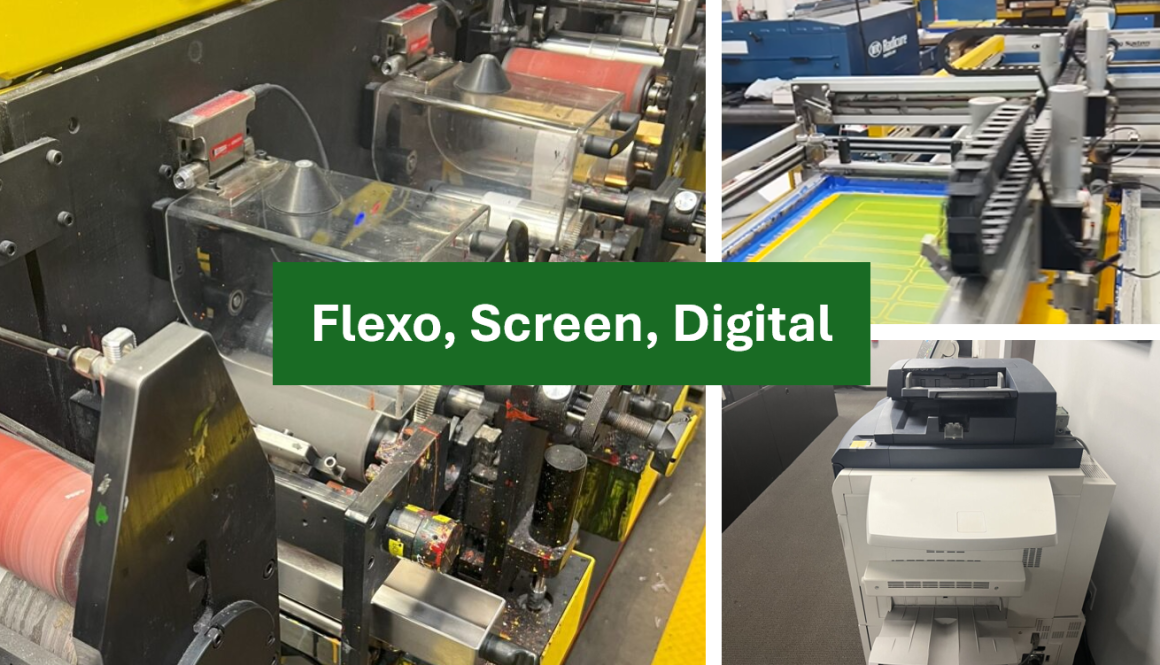
If you’ve ever toured a label pressroom or worked with a label supplier, you might’ve noticed something: they’re not using just one type of printing press. You’ll see flexographic (Flexo), Screen, and Digital Printing processes/presses. Why? Because no single method does it all. Each one brings something unique to the table, and depending on the label’s purpose, material, and run size, one method may outperform the others.
Let’s break down what each printing type does best.
Flexographic Printing: The High-Speed Workhorse
Flexo is the long-time champion of label printing. It uses flexible printing plates wrapped around cylinders to apply ink quickly and efficiently to a substrate (and it runs fast).
Why do we use it:
Perfect for long runs of the same design — think hundreds of thousands of labels
Specific or hard to create color matches
Works on a wide range of materials, from paper to films and foils
Cost-effective once plates are made
But here’s the trade-off: Flexo requires custom plates for each design, so there’s more setup time and cost. That makes it less ideal for short runs or frequent design changes.
Screen Printing: The Texture, and Opacity Expert
Screen printing isn’t as fast as Flexo, but it delivers something that’s hard to replicate like ink depth, vibrancy, and texture.
Why do we use it:
Can lay down very thick ink layers for bold, raised effects
Great for opaque whites on clear or metallic materials
Adds tactile or high-durability features that other print methods can’t match
Uses strong/durable inks that can provide your product with long lasting success
Digital Printing: The Customization Powerhouse
Digital printing is the newest player, and it’s quickly earning its place. Unlike Flexo and Screen, Digital doesn’t require tooling. It prints directly from a digital file, which makes setup fast and easy.
Why do we use it:
Ideal for short runs and brands with many SKUs
Handles variable data like barcodes, serial numbers, or personalization
Perfect for on-demand printing or last-minute changes
Digital allows you to print exactly what you need with little to no setup costs. No waste, no overstock.
So Why Use All Three?
Each printing technology brings its own strengths, and the best label printers know how to combine them to give your product the edge it needs. Whether you’re after speed, impact, customization, or durability — there’s a print process (or three) for that.
Curious which print method is right for your label project? Contact Us and we’ll help you figure out the perfect mix.
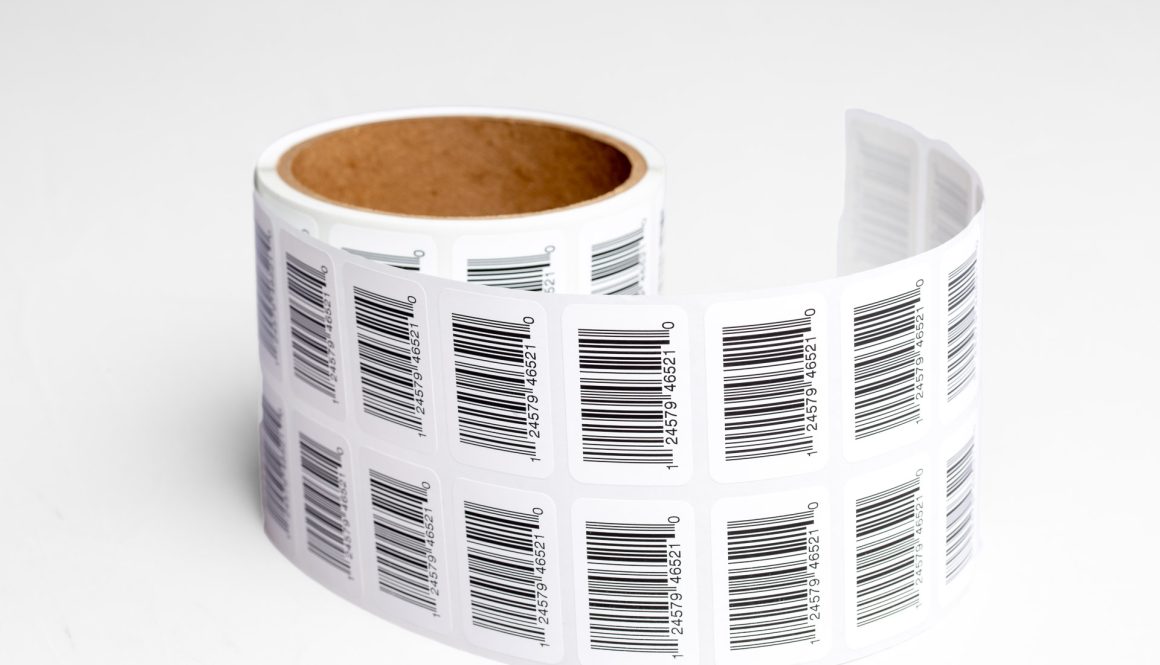
If you’re shopping for barcode or product labels, you’ve probably come across two common terms: thermal transfer and direct thermal. They sound similar, and both use heat to print, but they’re built for different jobs.
Understanding the difference between the two can save you time, money, and rework. Let’s break down how each method works, where they shine, and which one’s right for your application.
Direct Thermal: Simple, Fast, Short-Term
How it works:
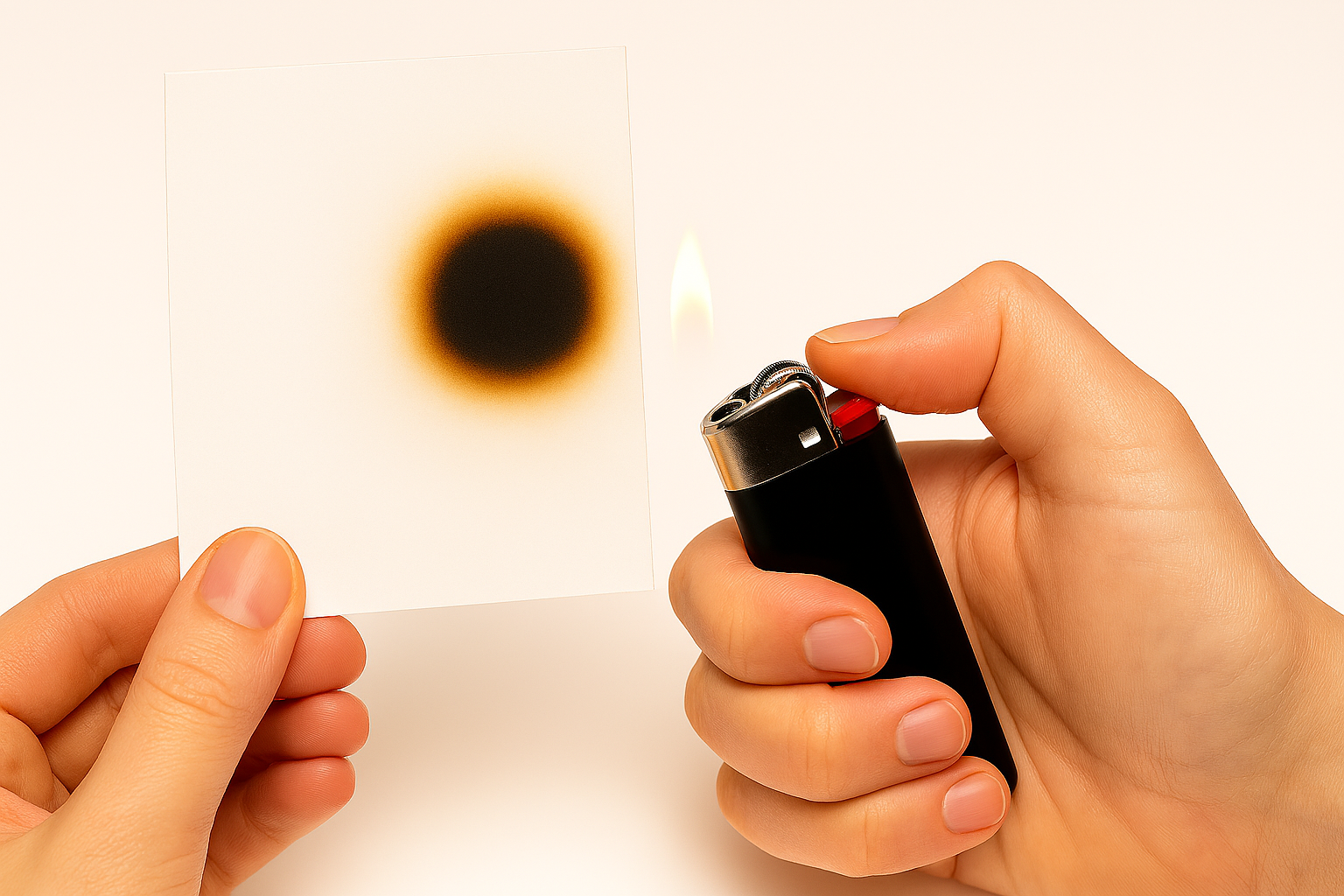
Direct thermal printing uses heat to activate a chemically treated label surface, turning it black wherever the printhead touches. There’s no ink, ribbon, or toner involved, just heat and label stock.
Ideal for:
Shipping labels (think UPS or FedEx)
Receipts or temporary tags
Labels for perishable items (like meat, deli, or bakery)
Visual example:
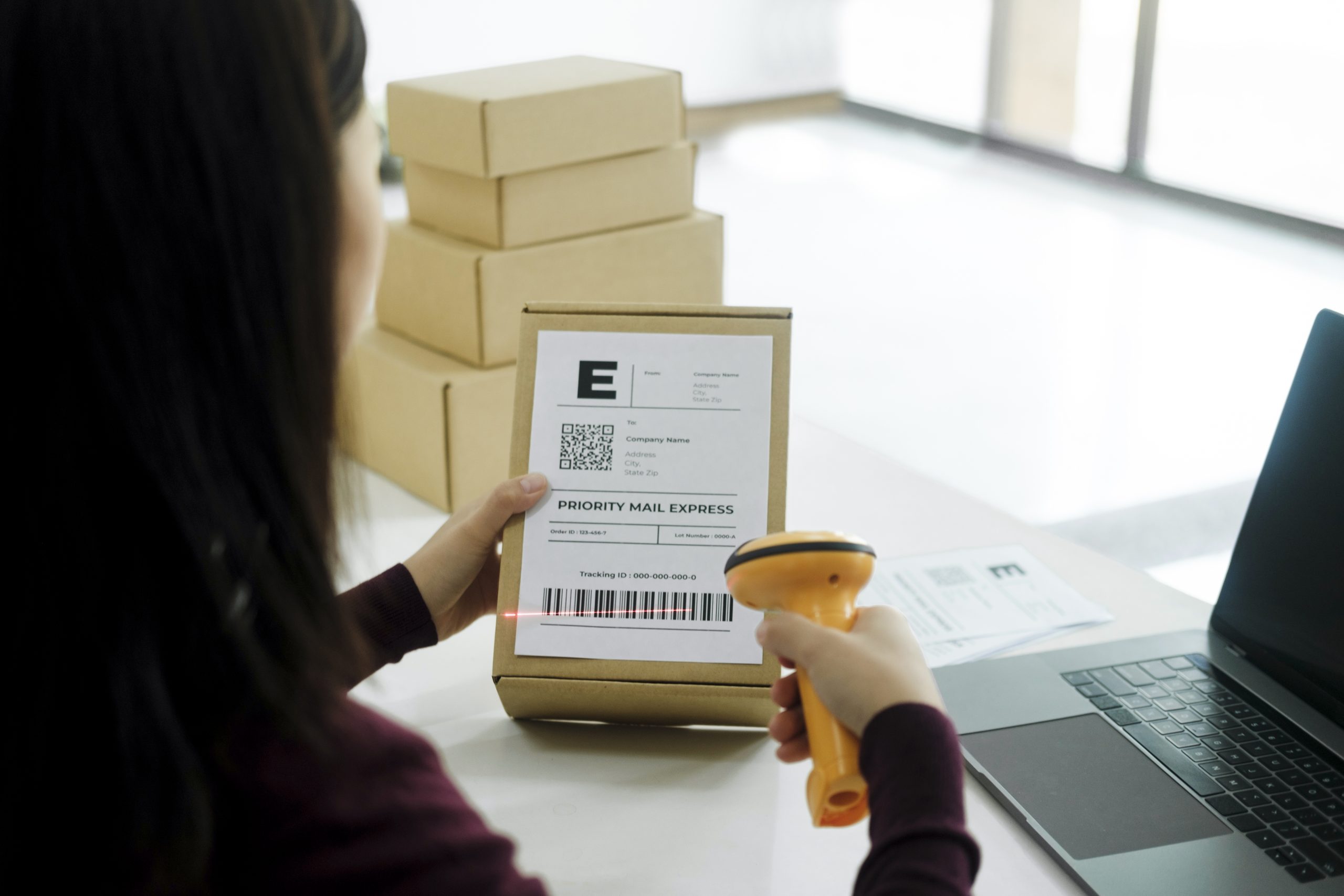
Imagine a box of online orders getting labeled, fast. A direct thermal printer zips out shipping labels with barcodes and addresses. No ribbons to change, no mess.
Pros:
No ribbon = lower supply costs
Fewer moving parts = easier maintenance
Great for high-speed, high-volume jobs
Cons:
Labels fade over time, especially when exposed to heat, light, or friction
Not ideal for long-term storage or outdoor use
Thermal Transfer: Built to Last
How it works:
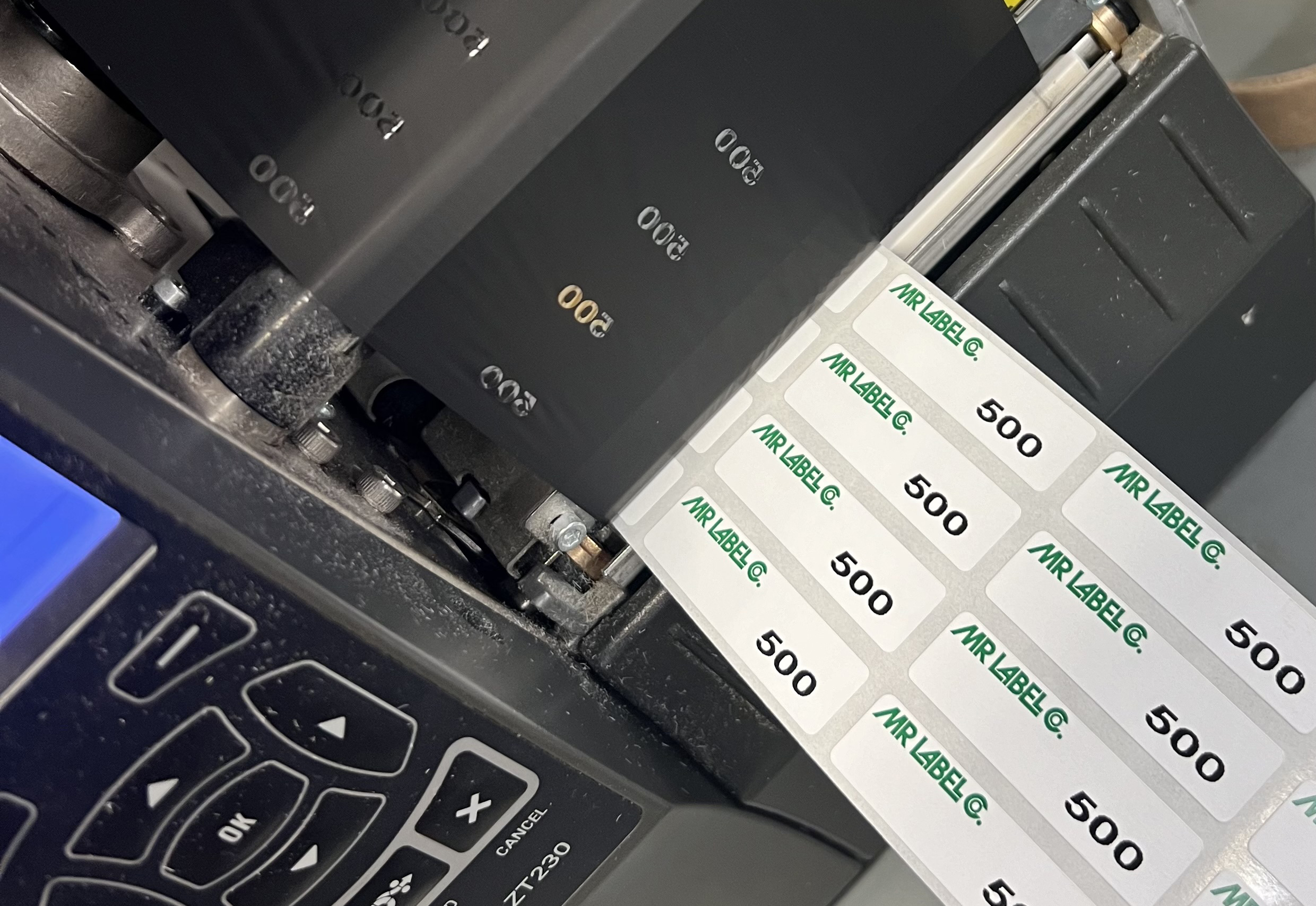
Thermal transfer printers use heat tomelt ink from aribbon onto the label. The ink bonds to the surface, creating a crisp, long-lasting image.
Ideal for:
Asset tags and inventory labels
Outdoor or freezer-grade labels
Compliance labels (e.g., GHS, UL, CSA)
Long-term product ID and parts tracking
Visual example:
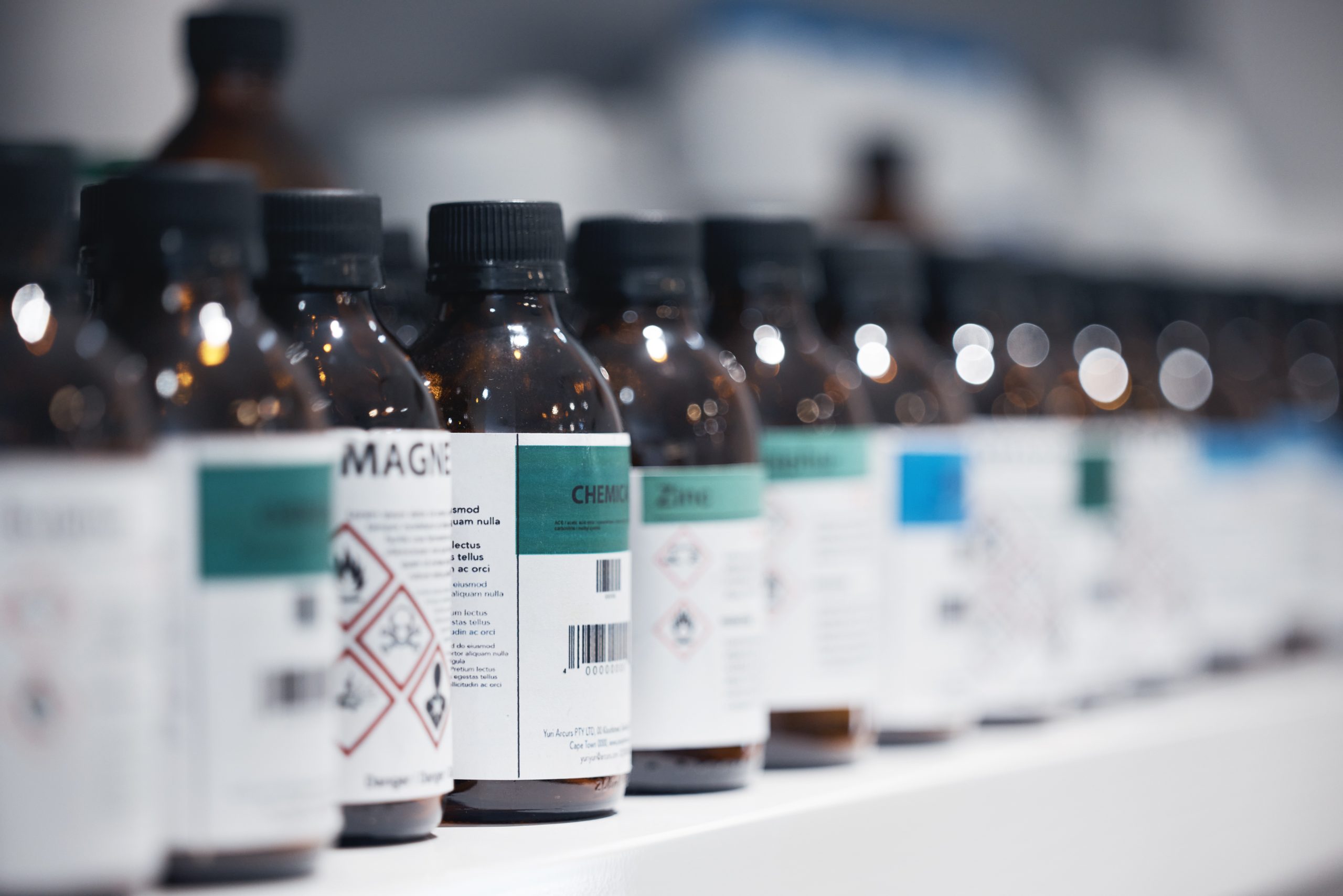
Imagine a busy laboratory where chemical bottles are handled daily: gloves on, chemicals in use, surfaces wiped down constantly. Each container needs a label that won’t smear, fade, or peel, even after repeated contact with solvents and cleaning agents. Thermal transfer printing creates these tough, high-contrast labels, ensuring barcodes stay scannable and safety information remains crystal clear for as long as the container is in service.
Science, chemical and bottle with pharmaceutical solution, medicine for healthcare study and poison.
Pros:
Longest-lasting print quality
Works with a variety of label materials (paper, polyester, polypropylene, etc.)
More than 6 months (especially in an environment where the temperature is not controlled)? Go thermal transfer.
What kind of environment will the label face?
Clean, indoor, temp controlled, short-term? Direct thermal is fine.
Outdoor, cold storage, or industrial? Thermal transfer is your friend.
What materials do you need?
Direct thermal mostly uses paper.
Thermal transfer works with paper and synthetic stocks for extra durability.
Both thermal printing methods have their place; it’s just about choosing the right tool for the job. If you’re printing shipping labels today and asset tags tomorrow, you might even need both.
Need help picking the right label material and printer setup? Let’s talk, we’ll make sure you get labels that do the job right the first time.
Moisture indicator labels are a reliable method of detecting the presence of moisture within an environment and are a great way to monitor product safety. These labels can help businesses avoid costly damage caused by excess moisture. They are especially useful for products that are subject to condensation from humidity. Whether you’re in manufacturing, shipping, or storage, moisture indicator labels could be a worthwhile solution for your business.
The MR Label Co Moisture Indicator Label
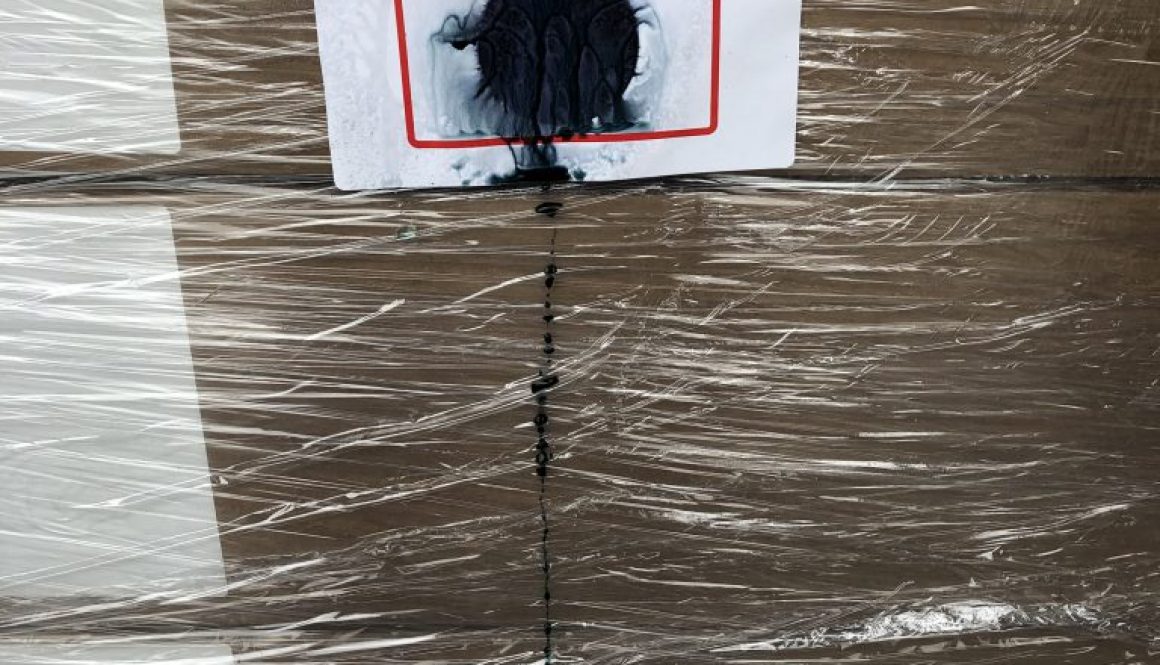
MR Label Company provides moisture indicator labels designed for single use. The label contains a concentrated area of water sensitive black ink that will show evidence of exposure when wet. It is essential that these labels are managed properly so they can be effective in maintaining product condition. Moisture indicator labels should be kept in a dry space before use to avoid premature activation. Along with using these labels we recommend sealed packaging for additional protection and assurance that the product has not been affected. Regular inspecting of the labels is critical in product security, as their purpose is to reveal a visible difference upon dampening.
Potential Applications for MR Label Moisture Indicator Labels
Metals
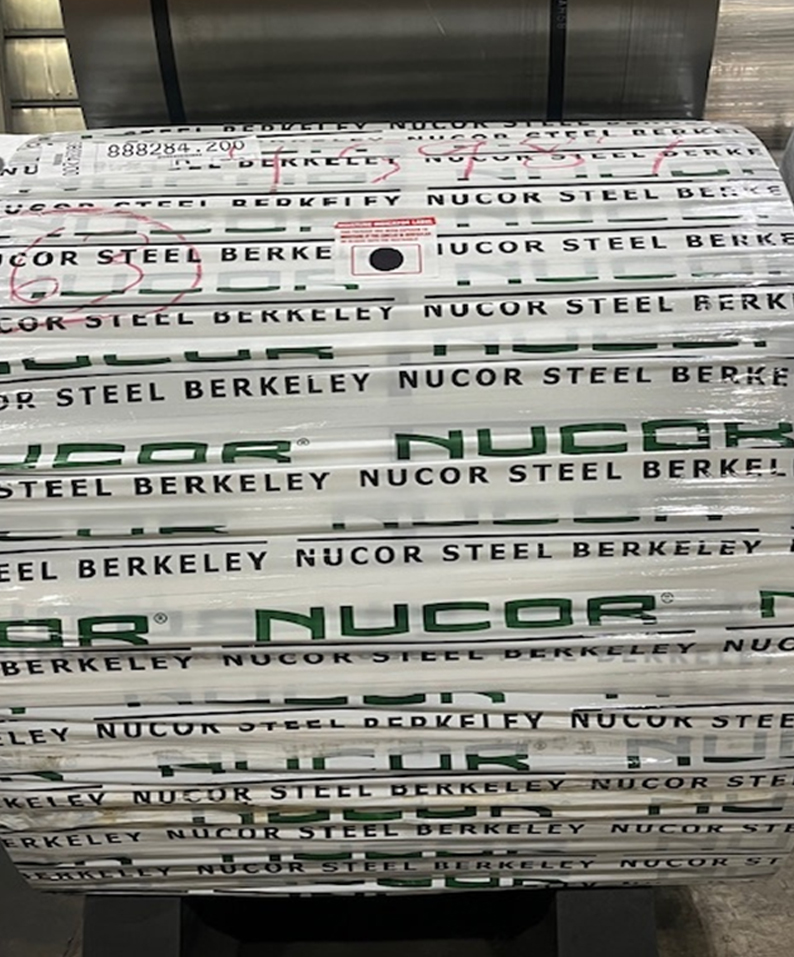
Metals such as iron, aluminum, and copper can corrode overtime when exposed to moisture. Moisture indicator labels monitor the conditions of the metal and help point out when and why it may be rusting.
One of our customers shared their perspective on how this label helps with their operations:
“Tags are put on the coils as they are received in to identify if the coils are having condensation in our plant. If the moisture tags are not running and the material has rust, it helps us identify that the potential rust issues happened prior to us receiving the material. Much like if the moisture label is running, we would be able to determine that the moisture issue was in-house.”
Storing and shipping products that need to be kept dry
In addition to metals, this label is good for a host of products that could be damaged from wetness such as electronics, aerospace equipment, and raw materials. The size of the label not only helps it stand out on large storage containers and crates, but the larger area of the ink also gives it more coverage than other indicating cards on the market. And unlike cards our label provides easy set up with the ability to adhere to surfaces.
Benefits of MR Label Co Moisture Indicator Labels
Businesses can gain several advantages by incorporating moisture indicator labels into their operations:
Cost-Effective Quality Assurance
Moisture indicator labels provide an inexpensive yet reliable way to monitor the product, reducing the need for costly equipment or extensive quality control measures.
Enhanced Product Integrity
By detecting moisture-related damage, these labels help businesses identify issues early, allowing for timely intervention.
Ease of Use
Moisture indicator labels are simple to apply and interpret, requiring no specialized training. The size of the label also increases visibility and coverage, allowing for easier inspection.
Explore MR Label Co Moisture Indicator Labels
If your business deals with water sensitive products, moisture indicator labels are a simple cost-effective tool. By incorporating these labels into your packaging or storage processes, you can safeguard your products and maintain quality standards. Explore our moisture indicator labels today on *Amazon and protect your products from unwanted moisture. If you are interested in bulk options, contact us directly to find the best solution for your needs!
* Notice: MR Label Company is not associated with the Amazon “MR-LABEL” brand. While our moisture indicator is listed under this brand, this label is solely produced by us.
Labeling in harsh environments isn’t just about sticking something on a surface — it’s about making sure your information sticks around, stays legible, and holds up under pressure. Whether you’re labeling tools, equipment, or packaging exposed to heat, cold, moisture, chemicals, or abrasion, you need a label that is built to last. When a label fails, so does the information it carries, leading to compliance issues, safety risks, or a whole lot of rework.
So what exactly makes a label “durable”? And how do you pick the right one for tough conditions?
Materials That Can Handle the Pressure
The foundation of any durable label is its face stock or the surface material that carries the print. In harsh environments, paper isn’t enough. Synthetic materials offer better resistance and longevity, but not all synthetics are created equal. Here’s a simple breakdown of commonly used synthetics:
Good: Polypropylene (PP) – Affordable, water-resistant, and handles basic moisture and light chemicals. Great for general use.
Better: Vinyl – Tough and flexible, especially good for curved or uneven surfaces where cracking is a risk.
Best: Polyester (PET) – The go-to for heavy-duty jobs. It’s resistant to abrasion, high heat, and aggressive chemicals. — often the top choice for industrial and long-term use.
Specialty: Polyimide – For extreme heat, polyimide offers unmatched temperature resistance, making it ideal for printed circuit boards or electronics.
Adhesive Strength: Built to Stick Around
A durable face stock won’t do much if the label won’t stay put. The adhesive needs to adhere to the right kind of surface and survive whatever the environment throws at it.
High-performance permanent adhesives: Stick like glue (literally) to metal, plastic, glass, or even powder-coated surfaces.
Temperature-resistant adhesives: These keep their grip in freezing cold, scorching heat, or sudden changes between the two.
Chemical-resistant adhesives: Built to survive splashes from oils, solvents, cleaners — you name it.
Pro-Tip: Always test sample labels on your actual surfaces under real-world conditions before committing to a full run.
Protective Top Coatings and Laminates
Synthetic labels are tough, but even they need extra protection in harsh settings. Top coatings and laminates help shield printed data from environmental wear.
UV coatings help prevent fading when labels are exposed to direct sunlight.
Clear polyester laminates add abrasion resistance and help repel moisture and chemicals.
UV inhibiting polyester laminates offer enhanced protection against both sun exposure and environmental wear.
Some labels are laminated first, and then printed using thermal transfer (yes, thermal transfer printing can go on top of certain protective layers if they’re designed for it).
In the harshest conditions — industrial plants, marine settings, or outdoor equipment — laminated labels are often the best defense. They keep barcodes and text readable long after other labels would wear away, reducing the need for costly re-labeling or product recalls.
Where Durability Pays Off
You’ll find durable labels wherever failure isn’t an option:
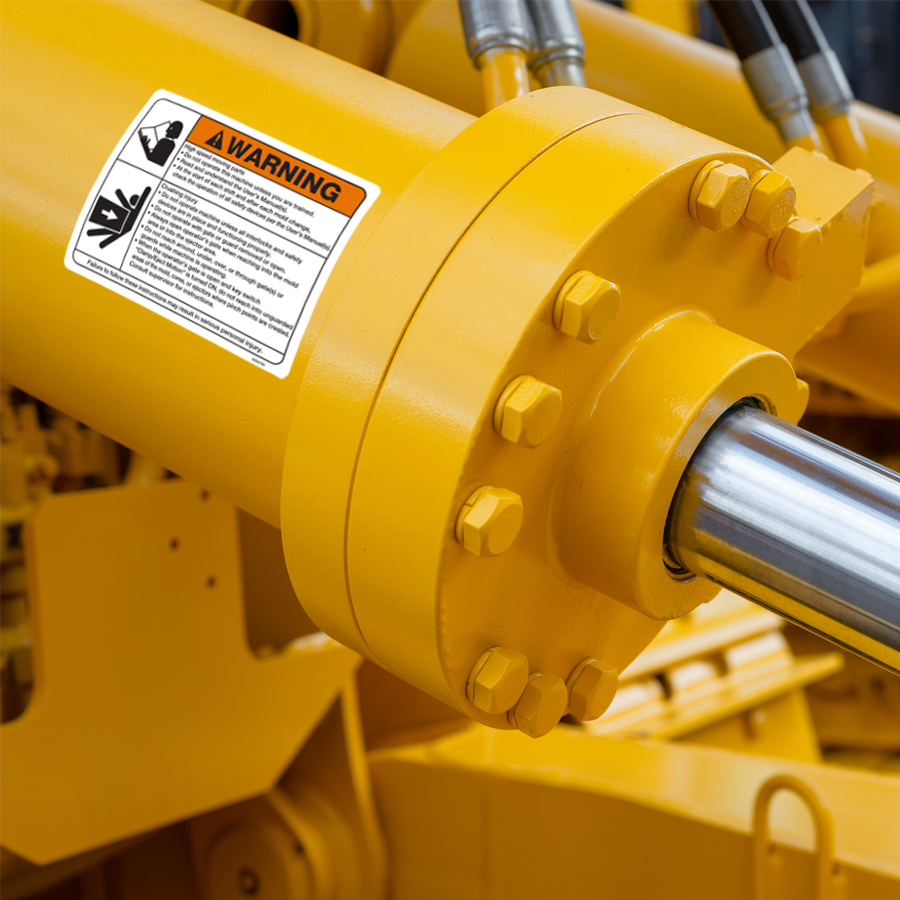
Asset tracking for machinery and equipment
Chemical drum labeling (including GHS compliance)
Cold storage and freezer labeling
Outdoor or marine product tags
Warehouse and industrial labeling systems
Investing in durable labels means fewer replacements, fewer misreads, and fewer compliance issues — all of which lead to lower costs and better reliability in the long run. These labels don’t just last longer, they work harder, protect better, and reduce risk.
Need help matching your label to your environment? Reach out, we’ll help you find a solution that sticks.