Drum and Barrel Labeling: GHS, BS 5609, and Chemical Label Requirements
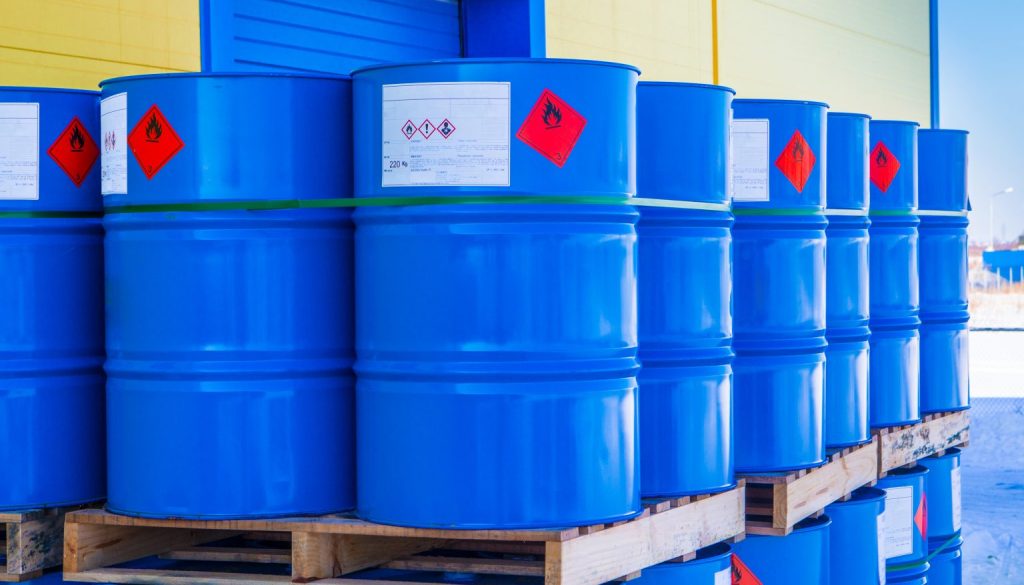
Drums and barrels are used to store and transport everything from industrial chemicals to cleaning products and hazardous materials. Their labels need to identify the contents, communicate relevant hazards, and suit the conditions the containers will encounter along the way.
Choosing the right label starts with understanding both the information required and the environment in which the container will be used.
GHS: Communicating Chemical Hazards
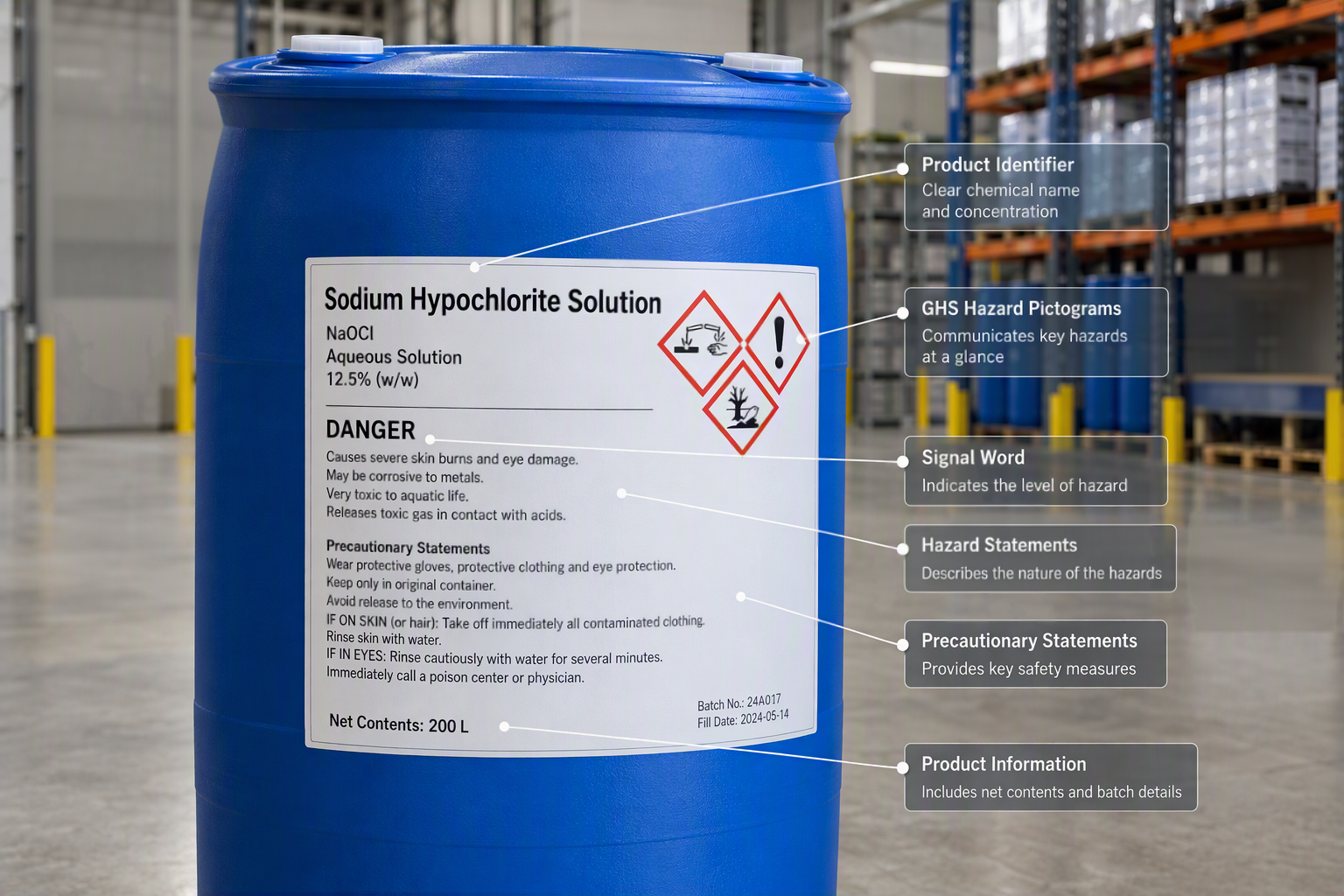
The Globally Harmonized System of Classification and Labelling of Chemicals (GHS) provides a framework for communicating chemical hazards. Depending on the applicable requirements, chemical labels may include a product identifier, signal word, hazard statements, precautionary statements, hazard pictograms, and supplier information.
These elements help workers and handlers recognize potential risks and understand how to handle a product safely. Text and pictograms must be clear and legible, so label design should account for available space, viewing distance, and the container’s shape.
Keep in mind that chemical hazard communication and transportation labeling aren’t always the same. Depending on the product and shipment, additional transport labels or markings may be required.
What Is BS 5609?
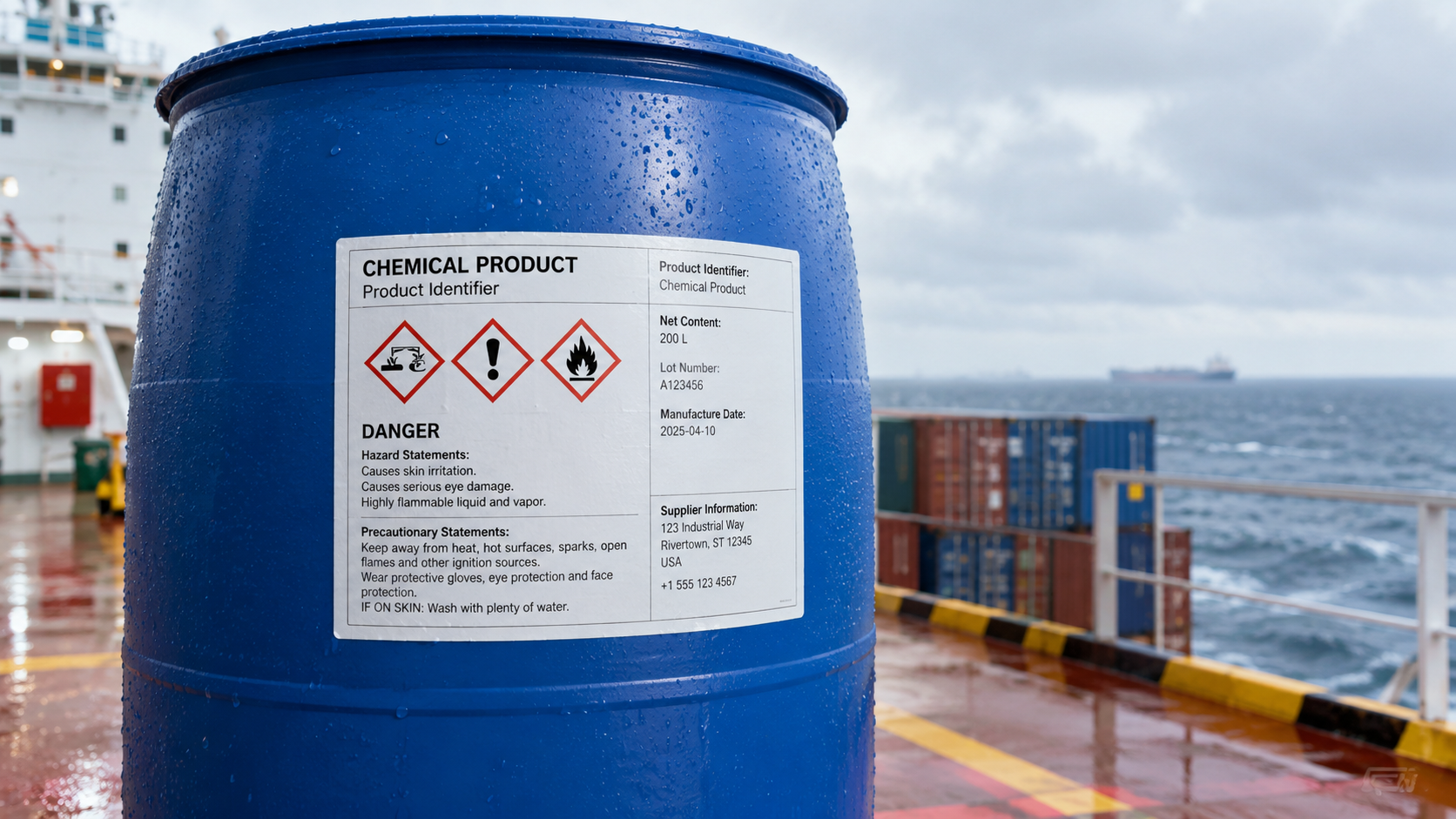
BS 5609 is a British Standard commonly referenced for pressure-sensitive labels used on containers of dangerous goods transported by sea. It addresses label performance under demanding marine conditions, where exposure to saltwater, weather, and handling can challenge both the printed information and the label itself.
When a shipment requires BS 5609-compliant labels, it’s important to confirm the applicable requirements and select a label construction that has been tested for the intended use. Not every durable label automatically meets this standard.
Choosing the Right Label Construction
The container itself is a good starting point. Steel drums and plastic barrels can require different adhesive approaches, particularly when labels are applied to curved surfaces or plastics that are difficult to bond to.
Next, consider the environment. Will the container be stored outdoors, exposed to moisture, or handled around oils, solvents, and other chemicals? Could labels be scraped, rubbed, or exposed to temperature changes during storage and transport?
Depending on the application, a suitable solution may combine a synthetic label material, a compatible adhesive, durable printing, and a protective coating or laminate. Thermal transfer printing is one option for applications that need clear, durable text and variable information, but the complete label construction should be evaluated against the actual conditions.
Plan for the Full Application
Before choosing a chemical or hazard label, consider the container material, required information, applicable regulations or standards, and expected exposure. Confirming these details early helps avoid choosing a label that looks right on paper but isn’t suited to the job.
Have chemical or hazard labels that need to meet specific requirements or withstand demanding conditions? Contact us today to discuss your application and find a labeling solution built for the job.